

Fire Detection System
Fire Alarm Systems
A comparison of four leading fire alarm system brands — Simplex, Cooper (Eaton), Hochiki, and Asenware.
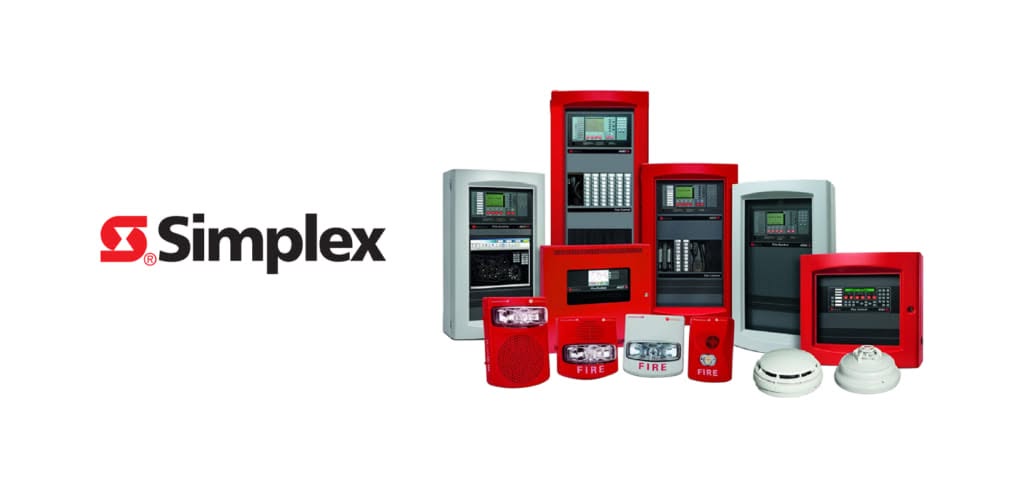
Simplex Fire Alarm Systems
Simplex (a brand by Johnson Controls) provides industry-leading fire detection, life safety, and mass notification solutions designed for commercial, industrial, and institutional facilities.
How a Simplex Fire Alarm System Works
- Detection: Automatic sensors (smoke, heat, flame detectors) or manual pull stations detect signs of a fire or emergency.
- Processing: The detection signal travels instantly to the main control panel.
- Notification: The control panel triggers audible alarms, flashing strobes, and pre-recorded voice evacuation messages to warn building occupants and alert emergency responders.
The Control Panel
The Simplex Fire Alarm Control Panel (FACP) is the central hub of the entire system.
- Role: It continuously monitors system integrity, processes incoming signals, activates outputs (horns, strobes, door holders), and logs events.
- Popular Models: Simplex 4010ES (for mid-sized facilities) and Simplex 4100ES (for large, complex, and high-rise buildings with network capabilities).
Addressable vs. Conventional Systems
Conventional Systems
- How it works: Devices are grouped into circuits or “zones” (e.g., Zone 1 = 1st Floor).
- Limitation: The panel only tells you which zone triggered, not the specific device.
- Best for: Small buildings, retail shops, or simple setups.
Addressable Systems
- How it works: Every device (detector, pull station, module) is assigned a unique digital ID (address).
- Advantage: The panel pinpoints the exact location and device (e.g., “Smoke Detector, Room 304, North Wing”). It also offers advanced self-diagnostics and trouble-shooting.
- Best for: Large commercial buildings, hospitals, schools, and multi-story facilities.
Key Advantages of Simplex Systems
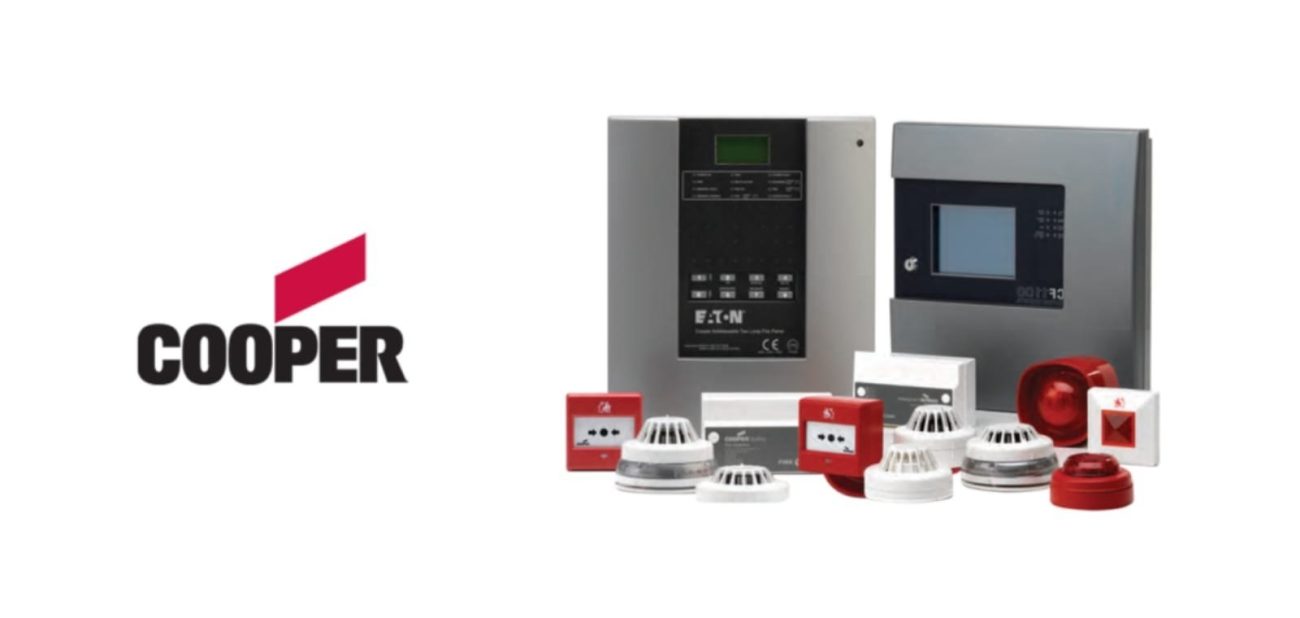
Cooper (Eaton) Fire Alarm Systems
Cooper Fire (part of Eaton) is a globally recognized brand renowned for dependable life-safety, fire detection, and evacuation solutions. Integrating legacy systems like Menvier and JSB, Cooper provides robust compliance and adaptability for commercial and industrial structures.
How a Cooper Fire Alarm System Works
- Detection: Automatic sensors (optical smoke, multi-criteria, or heat) and manual call points constantly supervise the environment.
- Processing: Signals are transmitted over hardwired loops or zones to the main control panel, which continuously scans system health.
- Notification: The control panel instantly triggers visual and audible warning units (sounders, strobes, and voice alarms) to direct safe evacuation.
The Control Panel
The Cooper control panel acts as the system’s brain, managing power supply, event logs, and output triggers.
- Addressable Series: Includes popular models like the CF1000 / CF1100 (single loop), CF1200 (two loops), and the high-capacity CF3000 / ULCF3000 multi-loop series for extensive facilities.
- Conventional Series: Includes reliable panel options such as the FX2202 (2-zone) and FX2204 (4-zone) panels, up to 8 or 16-zone variations designed for smaller sites.
Addressable vs. Conventional Systems
1. Cooper Addressable Systems (Intelligent)
- How it works: Every device (detectors, manual call points, and input/output modules) is hardwired onto a shared loop and assigned a unique digital address.
- Key Benefit: The panel displays the precise location and device identifier during an emergency (e.g., “Optical Smoke Detector, Room 105, Floor 1”), optimizing response times.
- Advanced Integration: Supports soft addressing, integrated short-circuit isolators, and compatibility with wireless hybrid expansion (such as SWIFT wireless modules).
2. Cooper Conventional Systems (Non-Addressable)
- How it works: Detectors and manual call points are wired in groups across dedicated circuits known as “zones” (e.g., Zone 1 for Ground Floor, Zone 2 for First Floor).
- Key Benefit: Cost-effective, simple to install, and ideal for straightforward applications.
- Limitation: The control panel only highlights the specific zone in alarm, requiring manual inspection of that zone to locate the exact trigger source.
Key Advantages of Cooper Fire Systems
Hochiki Fire Alarm Systems
for high-reliability sensors, open-protocol flexibility, and durable control panels.
How a Hochiki Fire Alarm System Works
- Sensing: Field devices (such as photoelectric smoke detectors, heat sensors, or manual call points) constantly monitor the environment for smoke, rapid temperature spikes, or manual activation.
- Signaling: When a threat is perceived, the device sends a signal back to the main control panel via hardwired loops or zones.
- Alerting: The control panel processes the event, instantly activating notification appliances (horns, bells, and LED strobes) to evacuate the building and alert emergency teams.
The Control Panel
The Hochiki control panel monitors status updates, manages power supplies, logs event histories, and triggers outputs.
- Addressable Panels: Often integrated with powerful platforms like the FireNET / L@titude series, offering advanced touchscreen graphics, network capabilities, and sophisticated cause-and-effect programming.
- Conventional Panels: Typically available in compact layouts (such as the HCP or HCV series spanning 2, 4, 8, up to multiple zones), ideal for straightforward, code-compliant installations.
Addressable vs. Conventional Systems
1. Hochiki Addressable Systems (Intelligent)
- How it works: Utilizes Hochiki’s Digital Communications Protocol (DCP). Every detector, module, and manual station has its own unique digital address on a shared signaling line circuit (SLC loop).
- Key Benefit: The panel displays the exact room, floor, and device ID triggered (e.g., “Smoke Detector, Room 202, East Wing”), drastically cutting down response times.
- Advanced Tech: Features drift compensation (auto-adjusting sensitivity as dust accumulates) to dramatically cut down false alarms.
2. Hochiki Conventional Systems
- How it works: Field devices are wired into specific circuits or “zones” (e.g., Zone 1 covers the ground floor, Zone 2 covers the 1st floor).
- Key Benefit: Economical, highly reliable, and straightforward to install.
- Limitation: The control panel identifies only the zone that went into alarm, requiring physical inspection of that zone to locate the exact trigger source.
Key Advantages of Hochiki Systems
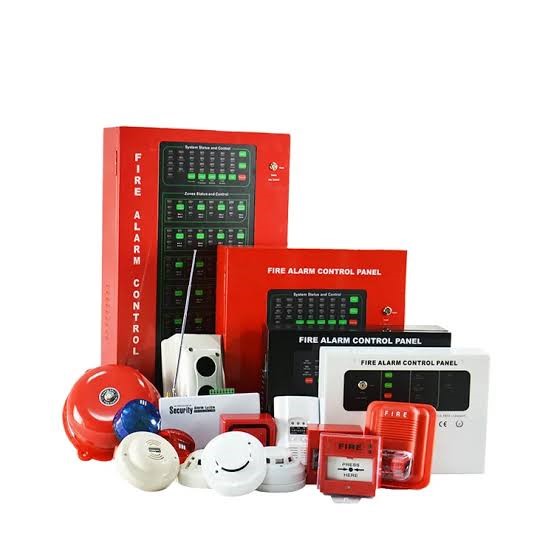
Asenware Fire Alarm Systems
Asenware is a trusted global manufacturer of reliable, cost-effective fire detection and safety systems, providing fully certified (EN54 and LPCB) solutions for commercial, industrial, and residential facilities.
How an Asenware Fire Alarm System Works
- Detection: Field sensors (photoelectric smoke detectors, heat detectors, or manual call points) continuously monitor the protected zones.
- Processing: The data signal is transmitted via hardwired loops or zones to the central control panel, which analyzes system health and checks for anomalies.
- Notification: Upon verifying a threat, the control panel triggers audible alarms, flashing LED strobes, and auxiliary linkage equipment (such as fire pumps or ventilation shutdowns) to secure the building.
The Control Panel
The Asenware Fire Alarm Control Panel (FACP) acts as the brain of the infrastructure, managing primary power, standby batteries, event logging, and device outputs.
- Addressable Series: Advanced models like the AW-FP100 (featuring a 7-inch color touchscreen) and the AW-AFP2100 series support multi-loop configurations and wide-scale networking.
- Conventional Series: The AW-CFP2166 series offers straightforward, multi-zone management (ranging from 2 up to 32 zones) tailored for smaller or budget-conscious applications.
Addressable vs. Conventional Systems
1. Asenware Addressable Systems
- How it works: Uses a non-polarity 2-wire intelligent bus where every connected detector, module, and manual call point is assigned a specific digital address.
- Key Benefit: The control panel instantly displays the exact location and device ID (e.g., specific room or floor) in an emergency, drastically reducing response time.
- Advanced Tech: Supports extensive loop capacities (up to 324 or 500 devices per loop), U-disk configuration backups, and peer-to-peer panel networking.
2. Asenware Conventional Systems
- How it works: Detectors and manual call points are wired into dedicated physical circuits or “zones” (e.g., Zone 1 = Ground Floor, Zone 2 = First Floor).
- Key Benefit: Highly cost-effective, dependable, and simple to set up for smaller commercial sites or standalone facilities.
- Limitation: The panel only identifies the general zone in alarm rather than the precise individual sensor, requiring a manual check of that zone.
Key Advantages of Asenware Systems
Protect Your People, Assets & Operations
Invest in an addressable fire alarm system and ensure a high level of safety and compliance for your facility, minimizing potential damage and downtime.